
English 
No. 21, Xingyuan Road, Jiefang Village, Gushan Town, Jiangyin City
Views: 0 Author: Site Editor Publish Time: 2026-10-09 Origin: Site


Hazardous environments threaten workers' lives every single day. Traditional fabrics often lack the necessary durability or fail to provide adequate thermal protection under extreme conditions. While aramid fibers offer exceptional heat resistance, they are frequently too costly for standard industrial use and can severely restrict wearer mobility.
An engineered FR nylon fiber directly solves this complex material challenge. By bridging the gap between rugged mechanical strength and life-saving thermal protection, it has become a cornerstone in modern protective apparel. In this comprehensive guide, you will learn the exact engineering criteria required to select the optimal flame-retardant material for your manufacturing line.
Inherent Protection: Understanding the chemical mechanism behind inherent flame retardancy is crucial. It ensures long-lasting thermal protection that will never wash out or degrade after repeated industrial laundering.
Performance Balance: The correct specification of modified polyamide provides an optimal combination of high tensile strength, extreme abrasion resistance, and critical self-extinguishing properties.
Strict Compliance: Selecting a raw material that enables the finished garment to meet stringent global safety standards like NFPA and EN ISO is a mandatory requirement for procurement.
Smart Sourcing: Evaluating supplier manufacturing capabilities, reviewing technical testing data like the Limiting Oxygen Index, and understanding customization options are foundational steps for successful product development.
The safety textile market is undergoing a massive transformation. Procurement teams are moving away from single-hazard solutions. Today, factory floors and tactical environments demand multi-norm workwear. Workers need garments that block flash fires, provide high visibility, and offer extreme breathability to prevent heat stress. Furthermore, strict environmental regulations are actively phasing out toxic PFAS coatings and halogenated flame retardants. This regulatory pressure has accelerated the adoption of inherently fire-resistant synthetic blends that rely on safer, phosphorus-based chemistry. Engineered nylon fits perfectly into this new operational standard.
To make informed procurement decisions, engineers must first understand the material science behind these specialized textiles. Standard nylon is a synthetic polymer globally recognized for its exceptional strength and elasticity. However, in its raw form, standard nylon is inherently flammable. It is highly prone to melting and dripping when exposed to severe heat.
Conversely, modified fire-resistant nylon is engineered at the molecular level to resist ignition. By integrating specific phosphorus-based chemical additives directly into the polymer chain during the high-temperature extrusion process, the fiber gains the ability to withstand significant thermal exposure without compromising its structural integrity.
The science of flame retardancy relies heavily on disrupting the combustion cycle. When exposed to a direct flame or intense radiant heat, the modified fiber undergoes a rapid chemical reaction. Instead of burning and feeding the fire, the material promotes the formation of a carbonaceous char layer. This solid, blackened char acts as a robust physical barrier. It insulates the underlying material from heat and physically blocks oxygen from reaching the combustion zone. This dual-action mechanism effectively forces the material to self-extinguish the moment the primary heat source is removed.
The method used to impart fire resistance significantly impacts the longevity of the final textile. Inherent flame retardancy means the protective properties are embedded directly into the polymer matrix during the spinning process. The protection cannot be washed out or chemically degraded over time. By contrast, topically treated fabrics apply a chemical coating to the surface of standard fibers only after they have been woven. Repeated exposure to industrial washing and heavy abrasion will eventually strip this chemical layer, leaving the wearer dangerously vulnerable.
Selecting the appropriate material requires balancing uncompromising safety with operational practicality. A properly engineered functional nylon fiber provides distinct technical advantages over traditional fabrics.
Nylon is globally recognized for its high tenacity and superior abrasion resistance. In heavy construction or mining operations, protective clothing is subjected to severe wear and tear. Modified FR nylon maintains these robust physical properties. Safety garments do not easily tear or puncture under constant physical stress. This extended lifecycle directly translates to lower overall replacement costs.
One of the most significant hazards of standard synthetic fibers is the dangerous melt and drip phenomenon. Standard synthetic polymers liquefy into hot droplets that adhere to human skin, causing severe third-degree burns. Advanced inherent nylon is specifically formulated to suppress this behavior. The rapid char-forming mechanism prevents the polymer from liquefying, drastically enhancing wearer safety during sudden flash fire events.
Protection should never restrict mobility. Stiffer materials like fiberglass blends can cause severe heat stress and reduce worker compliance. Nylon offers a significantly softer hand-feel, better dynamic flexibility, and a lighter overall weight. Modern variations can even be engineered with modified cross-sections to create moisture-wicking profiles, actively improving thermal regulation.
Unlike high-performance aramids that are notoriously difficult to dye and prone to fading, nylon accepts dyes exceptionally well. It delivers vibrant, consistent coloration with high colorfastness ratings. This ensures high-visibility safety garments remain fully compliant even after prolonged UV exposure and aggressive laundering.
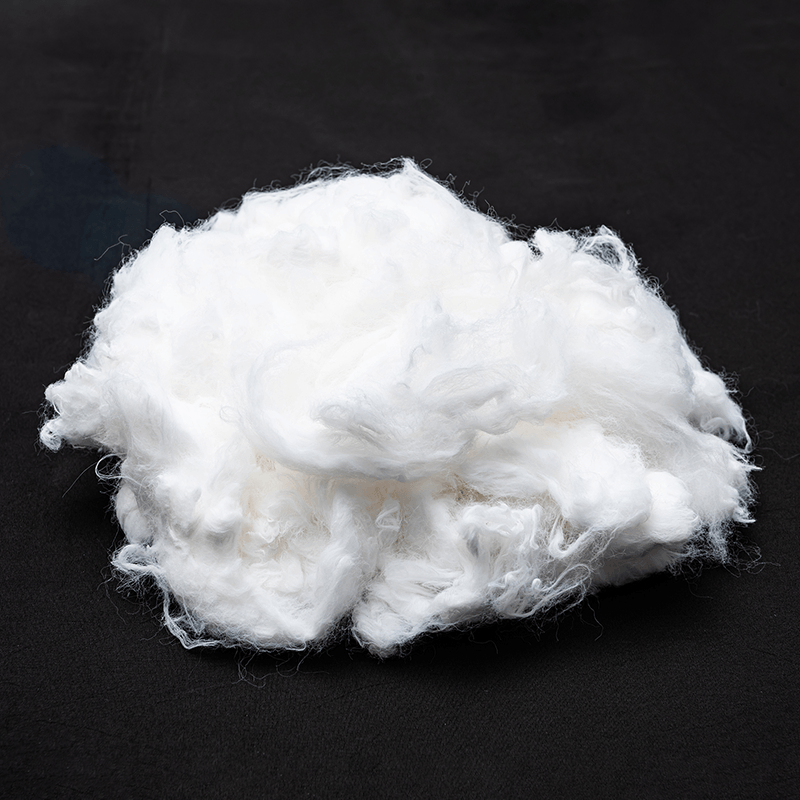
The versatile nature of this engineered material allows it to be utilized across a broad spectrum of high-risk industries. Identifying the specific end-use scenario is critical for determining the exact fiber specifications required before production begins.
On a humid offshore oil rig, heavy protective gear quickly becomes a liability if it causes heat exhaustion. Workers face constant threats from flash fires. Engineered fire resistant nylon is frequently utilized in lightweight coveralls and jackets. Its high abrasion resistance easily withstands rugged manufacturing floors, while its thermal properties provide critical seconds of life-saving protection.
Modern military operations demand gear that is lightweight and highly durable. Combat uniforms and tactical vests integrate this material to protect personnel from explosive blasts and vehicle fires. The material's unique ability to be dyed in precise camouflage patterns while maintaining infrared reflective compliance makes it an invaluable asset for tactical textile designers.
Firefighters and emergency medical responders require specialized multi-layered garment systems. While the outer shell of structural turnout gear often utilizes heavy para-aramids to withstand direct flames, modified nylon is frequently selected for inner thermal liners and station wear. It provides a comfortable, moisture-managing layer directly against the skin.
For procurement managers and textile engineers, selecting the correct raw material requires a methodical evaluation of technical specifications. Following this systematic approach ensures the final woven fabric meets all performance criteria without costly production delays.
First, evaluate the Limiting Oxygen Index. This is a fundamental metric in textile safety. It measures the minimum concentration of oxygen required to support continuous combustion. Since the Earth's atmosphere contains approximately 21 percent oxygen, any fiber with a lower index will burn easily in normal air. For professional safety applications, buyers should strictly specify a Limiting Oxygen Index greater than 28 percent. At this level, the fiber will extinguish almost instantaneously upon removal of the ignition source.
Next, assess the denier and staple length. The physical dimensions dictate the characteristics of the spun yarn. A lower denier like 1.5D results in a finer, softer yarn ideally suited for lightweight base layers. Conversely, a higher denier like 3.0D is required for spinning coarse, high-tenacity yarns used in heavy-duty canvas. The staple length, typically ranging from 38mm to 76mm, must be precisely matched to your downstream spinning system to prevent processing issues like excessive fly or uneven yarn tension.
In practice, synthetic polyamides are rarely used at 100 percent concentration in safety apparel. They are most effective when blended strategically. Evaluating how a high-quality flame retardant fiber interacts with other materials is a critical engineering step. Blending it with treated cotton or viscose dramatically enhances moisture absorption. Alternatively, blending it with meta-aramids or modacrylics can significantly boost the fabric's overall tensile strength.
Finally, review wash durability. Industrial garments are subjected to brutal laundering processes involving high temperatures and harsh alkaline detergents. Procurement teams must request empirical testing data from suppliers demonstrating performance after 50 to 100 industrial wash cycles. True inherent materials will show zero degradation in their vertical flame test results.
To justify the procurement of specific raw materials, engineers must conduct an objective comparative analysis. Evaluating modified nylon against alternative materials reveals its distinct strategic advantages in balancing cost, durability, and protection.
Material Type | Tensile Strength | Thermal Resistance | Dyeability & Comfort | Cost Efficiency |
|---|---|---|---|---|
Inherent FR Nylon | Excellent | High (LOI > 28%) | Excellent | High |
FR Polyester | Moderate | Moderate | Good | Very High |
Meta-Aramids | Good | Extreme | Poor | Low |
Modacrylic | Low | High | Good | Moderate |
Nylon inherently possesses a much higher tensile strength and superior abrasion resistance compared to polyester. While polyester is typically more cost-effective upfront, it is highly susceptible to premature wear. When factoring in the total cost of ownership, nylon presents a much better long-term return on investment.
Aramid fibers are the industry benchmark for extreme thermal protection, but they come with notable commercial limitations. They are exceptionally expensive, notoriously rigid, and very difficult to dye. Engineered nylon serves as a highly effective middle-ground solution. It provides essential flash-fire protection at a fraction of the cost while offering superior comfort.
Selecting a high-performance safety textile fiber is only the first step. The ultimate validation lies in passing rigorous global safety standards. In the North American market, NFPA 2112 is critical for the oil and gas sectors. It requires that garments subjected to a simulated flash fire result in minimal predicted body burn. ASTM D6413 is the foundational laboratory vertical flame test. To pass, the fabric must self-extinguish immediately and show absolutely no melting or dripping.
For textiles entering the European market, compliance with EN ISO 11612 is a mandatory legal requirement. The material is engineered to meet stringent requirements, ensuring flames do not propagate when briefly exposed to an ignition source. Additionally, modern procurement heavily scrutinizes chemical safety. Leading manufacturers ensure their products pass OEKO-TEX Standard 100 and comply with European REACH regulations, confirming the absence of heavy metals and toxic halogens.
The operational performance of the final garment is inextricably linked to raw material quality. The production of inherent fire-resistant synthetics requires sophisticated polymer compounding technology. The flame retardant additives must be uniformly dispersed at the nano-level within the polyamide matrix. If the dispersion is uneven, the resulting yarn will have weak spots and inconsistent test values. Buyers should mandate ISO 9001 certification and request batch testing data from independent laboratories like SGS or UL.
A competent supplier should offer robust customization capabilities. This includes adjusting cut lengths for specific spinning machinery, modifying denier for distinct fabric weights, and offering dope-dyed options for superior colorfastness. Transitioning to a new raw material involves technical adjustments during the spinning and weaving phases. Reliable suppliers provide comprehensive technical support, including guidance on optimal blending ratios and precise dyeing temperature curves.
When sourcing inherent FR nylon, the flame retardant properties are permanently engineered into the polymer's molecular structure during the high-temperature extrusion process. Because the protection is not a topical chemical coating applied after weaving, it cannot be washed out, worn away by friction, or degraded by sweat. The fabric will retain its self-extinguishing characteristics for the entire usable lifespan of the garment, reliably withstanding over 100 heavy industrial laundering cycles.
Historically, some flame retardants utilized heavy metals or halogenated compounds that raised severe environmental and health concerns. However, modern manufacturing utilizes advanced, halogen-free additives like phosphorus-based compounds. These modern formulations are non-toxic, do not bioaccumulate, and comply with stringent global environmental standards including OEKO-TEX Standard 100 and the European Union REACH regulations.
Yes, blending is a standard industry practice to optimize comfort, cost, and safety simultaneously. It is frequently blended with treated cotton, viscose, or wool. In these intimate blends, the natural fibers provide enhanced breathability and moisture absorption, while the synthetic nylon acts as a reinforcing structural grid. This combination significantly increases the fabric's abrasion resistance and tear strength.
Technical textile engineers distinguish between the two terms. Fire resistant typically refers to materials like meta-aramids that inherently resist catching fire and can withstand extreme heat without melting. Fire retardant implies that the material has been chemically modified to slow down ignition and self-extinguish once the primary flame source is removed. Modern functional polyamides are engineered to be flame retardant, actively interrupting the combustion cycle to prevent fire propagation.
Meta-aramids provide extreme thermal resistance but are highly rigid and very expensive to produce. FR nylon offers a strategic alternative. It provides excellent flash-fire protection and passes vertical flame tests, but at a significantly lower price point. Furthermore, nylon is much softer against the skin and flexes easily, greatly reducing worker heat stress and fatigue during long shifts.
Absolutely. One of the greatest engineering advantages of modified nylon is its excellent dyeability. Unlike aramids which struggle to hold bright pigments, nylon accepts high-visibility dyes easily. It maintains exceptional colorfastness even after prolonged exposure to harsh UV light and heavy industrial washing, making it perfect for compliant safety vests and jackets.
Choosing the right material is a critical engineering decision that directly impacts worker safety and production budgets. Balancing technical specifications with strict regulatory compliance is the blueprint for manufacturing success. If you are ready to upgrade your protective apparel line with high-tenacity, halogen-free materials, visit https://www.jy-hongying.com to explore our advanced product specifications and find the perfect match for your specific industrial requirements.


