
English 
No. 21, Xingyuan Road, Jiefang Village, Gushan Town, Jiangyin City
Views: 0 Author: Site Editor Publish Time: 2026-10-05 Origin: Site


Textiles deployed in high-moisture environments face a relentless engineering challenge. In standard untreated fabrics, harmful microbes thrive and multiply rapidly with every drop of ambient moisture and slight increase in body heat. Imagine a busy hospital ward where every privacy curtain and uniform must act as a passive structural shield against pathogens. Consider high-performance activewear that must remain genuinely fresh even after a grueling marathon. Relying on basic woven structures is no longer sufficient.
Advanced synthetic materials solve this persistent biological problem by halting bacterial growth at the cellular level. In this comprehensive technical guide, we will explore the underlying polymer science of these advanced materials. We will examine their distinct manufacturing benefits and detail their core commercial applications. Whether you are sourcing materials for medical scrubs, intimate apparel, or hospitality linens, understanding these exact mechanisms is crucial for elevating your production lines and ensuring verifiable product performance.
Cellular Disruption: Advanced synthetic threads actively pierce bacterial cell walls. This mechanism effectively prevents the growth and replication of odor-causing and harmful microbes directly on the fabric surface.
Permanent Protection: Unlike topical chemical coatings that wash away over time, inherent integration embeds active metal ions directly into the polymer matrix. This creates a defense mechanism that lasts the entire physical lifetime of the garment.
Performance Profile: Nylon offers unmatched durability, softness, and capillary moisture management. These mechanical traits make it the premier choice for demanding next-to-skin and heavy-duty institutional applications.
Versatile Applications: Beyond traditional healthcare settings, these advanced materials are revolutionizing everyday personal hygiene, sportswear, and public transportation upholstery.
Strategic Sourcing: Choosing the right materials requires a deep understanding of industry testing standards such as ISO 20743 and partnering with certified manufacturers capable of custom denier and cut-length specifications.
To make informed sourcing decisions for textile manufacturing, procurement teams must first understand the structural and chemical fundamentals of these advanced synthetic threads. Standard nylon, scientifically classified as polyamide, is a synthetic polymer globally recognized for its exceptional tensile strength, elasticity, and resistance to abrasion. In its raw and untreated form, standard nylon does not possess any inherent resistance to microscopic organisms.
It only becomes a high-performance functional nylon fiber through a highly controlled and precise manufacturing process. During the extrusion phase, specialized active additives—most commonly silver, zinc, or copper ions—are introduced directly into the raw polyamide melt. This vital masterbatch integration transforms the basic polymer into an active barrier against microscopic threats.
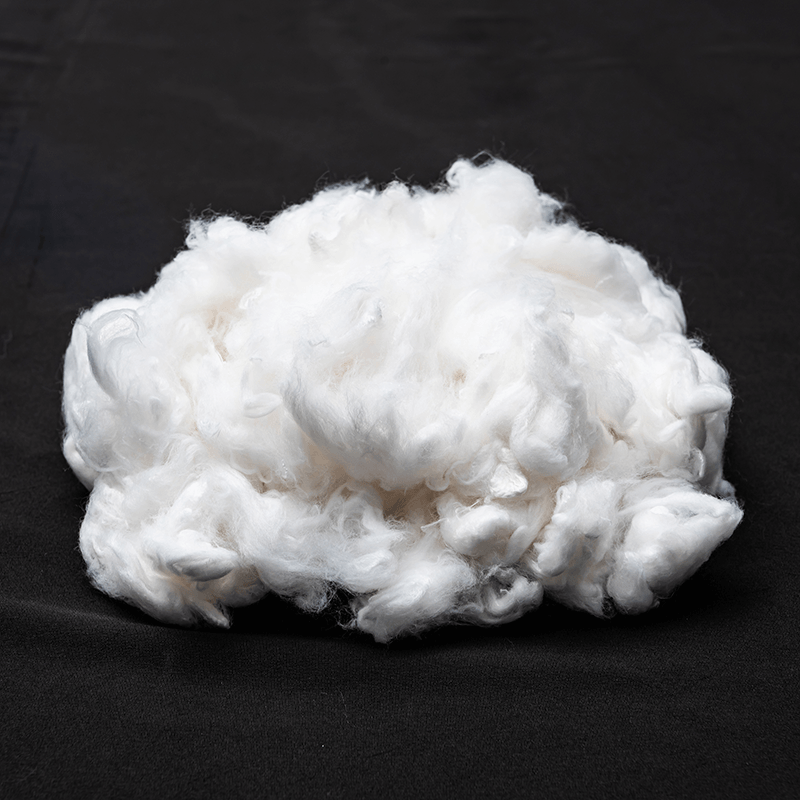
When extruded and cut, this material forms a highly versatile textile component. Because it is produced in uniform short cuts, typically ranging from 38mm to 112mm, it can be spun into yarn on its own or seamlessly blended with natural materials like combed cotton or merino wool. Consequently, this blending capability allows manufacturers to engineer hybrid fabrics that perfectly marry the natural soft hand-feel of cotton with the relentless pathogen resistance of synthetic polyamide.
In the global textile industry, terminology is frequently used interchangeably. This lack of precision can lead to costly confusion during the procurement process. For B2B buyers and product engineers, distinguishing between these specific terms is critical for regulatory compliance and accurate consumer marketing.
Terminology | Primary Target | Mechanism of Action | Common Textile Applications |
|---|---|---|---|
Antibacterial | Bacteria including Staphylococcus aureus and E. coli | Inhibits bacterial cell division and prevents odor-causing bacterial growth. | Activewear, underwear, medical scrubs, daily socks. |
Antimicrobial | Bacteria, Fungi, Mold, Mildew | Offers a broader spectrum of bio-protection by destroying or inhibiting various microorganisms. | Hospital bedding, outdoor gear, wound dressings. |
Antiviral | Viruses including Influenza | Neutralizes viral particles by degrading their lipid envelopes or protein capsids. | High-risk clinical PPE, specialized medical masks. |
For the vast majority of hygiene applications—ranging from intimate apparel to standard medical uniforms and hospitality linens—antibacterial properties remain the primary engineering focus. Bacteria are the primary culprits behind fabric degradation, persistent unpleasant odors, and common skin-level infections.
Understanding the mechanism of action at a microscopic level is crucial for evaluating the true efficacy and longevity of a textile product. The science behind these materials relies on precise chemical engineering rather than superficial and temporary treatments.
There are two primary methods for manufacturing textiles with microbial resistance. These are post-finishing and inherent integration. Post-finishing involves applying a liquid chemical coating to the surface of a finished fabric. While cost-effective in the short term, this method carries a significant and often overlooked drawback. The coating physically degrades and washes away. After just 10 to 20 industrial wash cycles, the fabric frequently loses its protective properties and leaves the wearer entirely vulnerable.
In stark contrast, inherent antibacterial fiber utilizes advanced melt-spinning technology. Before the nylon is extruded into thread, the active agents are mixed directly into the molten polymer masterbatch. When the polymer cools and solidifies, these agents become a permanent structural part of the matrix itself. For institutional buyers seeking long-lasting and wash-resistant products, inherent integration is unequivocally the superior choice. The bio-protection lasts for the entire physical lifecycle of the garment.
The true effectiveness of this material lies in its ability to actively interrupt the biological processes of bacteria. When active ions are embedded in the matrix, they remain dormant until they encounter ambient moisture. This moisture can come from human sweat, wound exudate, or environmental humidity.
Specifically, once activated by this moisture, the defensive mechanism unfolds in three objective stages. First, membrane disruption occurs. The positively charged metal ions are naturally drawn to the negatively charged cell walls of the bacteria. The ions pierce the bacterial membrane and cause immediate structural failure. Second, cellular suffocation takes place. Once inside the cell, the ions bind to essential enzymes. This abruptly disrupts the ability of the bacteria to process oxygen and nutrients. Finally, DNA inhibition ensures the colony collapses. The active agents interact with the bacterial DNA to prevent the microorganism from replicating.
A widespread misconception in the apparel industry is that human sweat inherently possesses a foul odor. In reality, the sweat secreted by apocrine glands is entirely odorless. The unpleasant smell we associate with sweat is actually a byproduct of bacteria breaking down the proteins and lipids present in the perspiration.
Furthermore, by utilizing inherent functional threads, manufacturers can stop this biological process at the source. Because the material continuously inhibits bacterial growth, the microbes never have the opportunity to metabolize the sweat into volatile organic compounds. Consequently, the fabric remains incredibly fresh. It effectively provides built-in odor control without relying on heavy perfumes or chemical masking agents.
While cotton and polyester remain staples in general textile manufacturing, nylon presents distinct commercial and performance advantages when specifically engineered for demanding environments.
Nylon is inherently characterized by its high tensile strength and superior abrasion resistance. In demanding environments like hospitals or commercial hotels, textiles are subjected to rigorous high-temperature industrial laundering on a daily basis. Standard fabrics quickly pill, thin out, or lose their structural integrity under these harsh conditions.
However, when utilizing a high-quality hygiene textile fiber made from polyamide, the fabric easily withstands extreme wear and tear. Because the active properties are spun directly into the polymer matrix, independent laboratory testing frequently demonstrates that the efficacy remains intact even after 50 to 100 intensive wash cycles. This remarkable durability translates directly to a significantly higher return on investment for institutional buyers.
Despite its industrial-grade strength, fine-denier nylon is incredibly soft to the touch. This tactile advantage makes it an ideal material for intimate next-to-skin applications. Unlike certain topical chemical treatments that can trigger contact dermatitis or allergic reactions, the active agents in inherent nylon threads are securely locked within the polymer. They do not leach harmful chemicals onto the epidermis.
In addition, this biocompatibility ensures that the fabric does not cause irritation. It is exceptionally safe for sensitive skin, allergy sufferers, and even prolonged wound care applications where human tissue is already compromised.
Bacteria and fungi thrive in warm and damp microclimates. Nylon elegantly addresses this by offering excellent moisture management properties. Through capillary action, the threads efficiently wick moisture away from the skin and spread it across the broader surface of the fabric where it can evaporate rapidly.
By continuously pulling sweat away from the body, the fabric maintains a dry and comfortable microclimate. This breathability not only enhances physical comfort but also acts as a secondary physical deterrent against microbial proliferation. It perfectly complements the chemical action of the embedded ions.
Recent market analyses highlight a structural shift in the global textile supply chain. Driven by heightened post-pandemic awareness, the demand for active hygiene solutions has decisively transcended clinical boundaries. Consumers now expect everyday garments—from gym wear to subway seating—to offer the same level of verifiable bio-protection once reserved exclusively for medical environments.
As a result, forward-thinking manufacturers are rapidly pivoting from temporary chemical finishes to inherent polymer solutions. Market data indicates a surge in the procurement of functional masterbatches. Brands are realizing that microbial resistance must be a permanent and verifiable feature rather than a transient marketing claim. This shift is redefining quality standards across the apparel, hospitality, and automotive upholstery sectors.
The transition from theoretical polymer science to practical textile engineering reveals the true versatility of these materials. By integrating advanced threads into specific product lines, manufacturers can effectively address distinct environmental challenges.
In healthcare settings, textiles frequently act as fomites, which are inanimate objects capable of carrying and transmitting infectious agents. Standard polyester or cotton blends can harbor pathogens for extended periods. The introduction of advanced synthetic threads into medical textiles serves as a critical passive engineering control to mitigate this severe risk.
Primary applications include surgical scrubs, hospital bed linens, privacy curtains, and reusable wound care dressings. In these high-stakes environments, the objective is not to replace active sterilization protocols. Instead, the goal is to drastically reduce the baseline bioburden between scheduled launderings. This inherent durability helps healthcare facilities manage the ongoing challenge of hospital-acquired infections while maintaining the tensile integrity of their valuable textile assets.
Beyond the clinical environment, the microclimate created next to the human skin presents a different set of challenges. Intimate apparel, socks, and feminine hygiene products are subjected to constant friction, elevated body heat, and moisture from perspiration. This creates an optimal incubation environment for both bacteria and fungi, leading to odor generation and potential skin irritation.
Utilizing nylon staple fiber in these applications offers a powerful dual-action solution. First, the physical structure provides excellent moisture-wicking properties. Second, the embedded agents actively disrupt the cellular division of odor-causing bacteria before they can metabolize sweat. For the end-user, this translates to prolonged freshness and a sharp reduction in dermatological discomfort. For the manufacturer, it provides a distinct and verifiable value proposition in a highly competitive apparel market.
The demand for enhanced hygiene has expanded significantly into commercial and public sectors.
Premium hotels are investing heavily in functional bed linens and towels to assure guests of impeccable room hygiene. Simultaneously, these materials prevent mildew formation in damp storage rooms. In the realm of high-performance sportswear, athletes require garments that can withstand intense physical exertion without accumulating permanent odors. Functional nylon eliminates this issue entirely. Furthermore, upholstery in buses, trains, and airlines is increasingly woven with advanced threads to protect thousands of daily commuters from surface-level bacteria in densely populated urban environments.
In the contemporary textile manufacturing landscape, environmental compliance is no longer optional. B2B buyers must evaluate materials not only for their performance metrics but also for their lifecycle environmental footprint. The integration of microbial-resistant technologies presents a compelling case for modern sustainability.
Life cycle assessments of textile products consistently demonstrate that the washing and drying phase accounts for a massive portion of the total energy and water consumption of a garment. Consumers typically launder clothing due to odor accumulation rather than visible soil. Because an antimicrobial fiber actively suppresses the bacterial growth responsible for these odors, garments can be worn multiple times before requiring laundering.
This subtle shift in maintenance behavior yields significant environmental dividends. Washing garments less often conserves thousands of liters of fresh water per household annually. It drastically reduces the electricity consumed by heating water and running tumble dryers. Furthermore, when laundering is necessary, these fabrics can achieve hygienic cleanliness at lower wash temperatures, eliminating the need for energy-intensive hot water cycles.
The degradation of textile threads is not solely caused by mechanical friction. Biological factors play a highly destructive role. Fungi and certain bacterial strains secrete enzymes that gradually break down polymer structures. This leads to microscopic pitting, loss of tensile strength, and eventual fabric failure.
By incorporating active agents into the fabric blend, manufacturers effectively neutralize these biological degradation pathways. The embedded ions prevent microbial colonies from establishing themselves on the surface, thereby preserving the structural integrity of the polyamide over a much longer period. Extending the usable life of a textile delays its entry into the waste stream. This directly supports the principles of a circular economy and reduces the upstream environmental impacts associated with virgin petroleum extraction.
Identifying the theoretical benefits of functional textiles is only the first step. For procurement managers and textile engineers, the critical challenge lies in execution. You must source high-quality materials that meet strict regulatory standards and integrate seamlessly into existing manufacturing processes.
Objective empirical validation is essential when making functional claims about textile products. B2B buyers must require suppliers to provide independent laboratory testing data based on internationally recognized standards. The most common and rigorous standard is ISO 20743, which determines the quantitative antibacterial activity of textile products. This test measures the exact logarithmic reduction of bacterial populations over a contact period of 18 to 24 hours. Another critical standard is AATCC 100, the benchmark for antimicrobial fabric performance in the United States.
Beyond efficacy, safety and biocompatibility must be verified. Sourcing materials with an OEKO-TEX Standard 100 certification ensures that the material has been rigorously tested for harmful substances and that the embedded agents will not leach out and cause dermatological toxicity.
The production of inherent functional nylon requires highly sophisticated polymer extrusion technology. The active agents must be dispersed uniformly into the masterbatch before the melt-spinning process. If the dispersion is uneven, the resulting yarn will exhibit inconsistent performance and potential weaknesses in tensile strength.
Therefore, partnering with an established manufacturer with a proven track record is paramount. Engineers should evaluate suppliers based on their lot-to-lot consistency and customization capabilities. Look for suppliers who can provide specific denier ranges typically between 1.5D and 15D, alongside cut lengths from 38mm to 112mm. The ability to customize cross-sections, such as trilobal or round profiles, is also a mark of a superior technical partner. A transparent supplier will offer sample testing and collaborative troubleshooting to optimize the blend for your specific weaving or knitting machinery.
Antibacterial nylon represents a fundamental shift in how the industry approaches health, comfort, and sustainability in modern textiles. By combining relentless and permanent microbial protection with the exceptional physical durability of polyamide, this material solves the persistent challenges of fabric degradation, odor retention, and pathogen transmission.
Whether deployed in high-stakes clinical environments, high-performance sportswear, or everyday intimate apparel, inherent functional threads support strict hygiene protocols. They actively contribute to environmental sustainability through reduced laundering demands. For manufacturers and brands looking to elevate their product offerings, transitioning to these advanced materials is a strategic investment in product quality and long-term consumer trust.
Yes, inherent antibacterial nylon is highly biocompatible and exceptionally safe for sensitive skin. Unlike topical chemical finishes that can flake off or leach onto the epidermis, the active inorganic agents are deeply embedded within the polymer matrix during the extrusion process. This structural integration ensures that the active components remain trapped. They target only the microscopic bacteria that come into direct contact with the fabric surface without causing dermatological irritation or disrupting the natural microbiome of the skin.
When utilizing inherently functional nylon, the antibacterial efficacy is designed to last for the entire physical lifespan of the garment. Because the antimicrobial agents are spun directly into the core, they cannot be washed away or physically abraded off. Empirical testing according to ISO standards routinely demonstrates that these fabrics maintain over 99 percent bacterial reduction efficacy even after 50 to 100 rigorous industrial wash cycles. This far outperforms traditional post-production textile coatings.
Absolutely. Functional staple fiber is engineered specifically to be blended with a wide variety of natural and synthetic materials. It is frequently spun together with combed cotton, merino wool, polyester, or elastane. Blending allows textile engineers to combine the high tensile strength, abrasion resistance, and permanent hygiene properties of the functional nylon with the distinct tactile feel or stretch characteristics of other fibers. This results in a highly optimized composite yarn suitable for diverse applications.
It is important to differentiate between microbial categories. Standard antimicrobial fabrics are specifically engineered to disrupt the cellular walls and DNA replication processes of bacteria and fungi. Viruses operate through entirely different biological mechanisms and lack cell walls. While certain specialized textile treatments are formulated to exhibit antiviral properties, standard antibacterial nylon is primarily specified for the prevention of bacterial proliferation, odor control, and the reduction of bacterial bioburdens in hygiene applications.
Yes, it actively supports environmental sustainability through the significant reduction of resource consumption during the use phase of the product. By effectively preventing the bacterial growth that causes fabric odors, these textiles require much less frequent laundering. This behavioral shift conserves massive volumes of water and reduces the electrical energy required for washing and machine drying. Additionally, by preventing biological degradation of the polymer structure, the material extends the usable lifespan of the garment, reducing textile waste and supporting a more circular manufacturing economy.
Maintaining these advanced fabrics is straightforward and highly energy-efficient. Because the active agents continuously prevent odor-causing bacteria from multiplying, you can wash the garments less frequently. When laundering is required, standard machine washing at lower temperatures is perfectly sufficient to achieve hygienic cleanliness. Avoid using heavy bleach or fabric softeners, as excessive softeners can coat the fabric surface and temporarily block the embedded metal ions from interacting with ambient moisture.
If the fabric utilizes inherent masterbatch technology rather than a surface coating, it will not lose its effectiveness over time. The active silver or zinc ions are permanently locked inside the polymer structure during the high-temperature extrusion process. As long as the physical fabric remains intact, the antibacterial properties will continue to function at peak efficacy, providing reliable odor control and bio-protection year after year.
If you are looking to upgrade your textile manufacturing with premium, verifiable bio-protection, choosing the right material specifications is your most critical step. Explore the high-performance solutions engineered by JY-Hongying. Visit JY-Hongying to discover tailored functional fibers that meet rigorous international standards and elevate your product lines today.


