
English 
No. 21, Xingyuan Road, Jiefang Village, Gushan Town, Jiangyin City
Views: 0 Author: Site Editor Publish Time: 2026-10-17 Origin: Site


A single weak spot in a yarn strand compromises an entire industrial textile run. Factory floor managers face the daily headache of frequent machine jams, poor tension control, and rejected batches. The root cause often lies upstream, long before the spinning phase even begins. Integrating a premium raw material at the foundational level solves these exact operational bottlenecks.
In this technical breakdown, we explore the unique properties of heavy-duty unspun materials. We will examine their critical industrial applications and outline how to source the precise specifications needed to optimize your production line.
Ultimate Structural Foundation: Specialized unspun materials provide superior tensile strength and extreme abrasion resistance for heavy-duty spinning operations.
Operational Efficiency: Utilizing a high-quality combed strand ensures smoother mechanical processing. This drastically reduces machine jams and yields a highly uniform final yarn product.
Critical Applications: These robust fibers remain the preferred choice for life-saving and high-stress applications. Common uses include automotive tire cords, marine mooring ropes, and safety harnesses.
Precise Sourcing: Selecting the correct material requires a strict evaluation of filament denier, cut length, and supplier consistency to match your specific industrial drafting machinery.
To grasp the true value of heavy-duty textiles, procurement teams and engineers must look past the finished yarn. The foundation of any rugged synthetic product relies heavily on the quality of its unspun components.
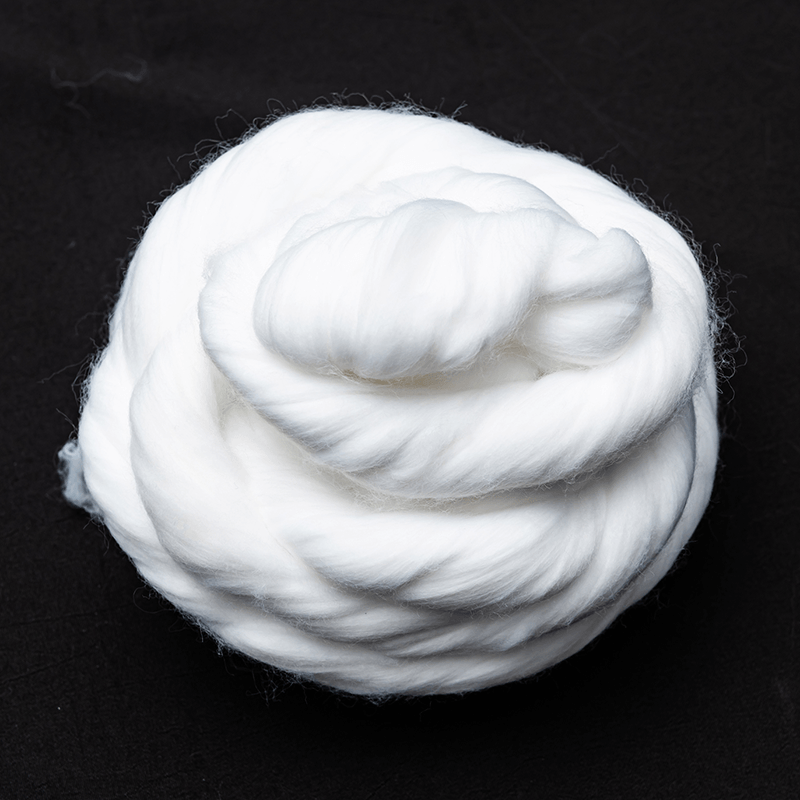
In the technical textile realm, a top acts as the crucial bridge between raw polymer and spun yarn. Frequently referred to as a nylon sliver, it is a continuous, thick strand of loosely assembled, untwisted synthetic fibers. Before reaching this highly organized state, raw polyamide chips are melted and extruded through a spinneret to create a massive bundle of continuous filaments called a tow.
Through a rigorous mechanical process of stretch-breaking or cutting, followed by crimping, carding, and gilling, this tow transforms into a highly uniform sliver. Every individual fiber is combed strictly parallel to one another. This precise alignment is not just aesthetic. It allows the fibers to glide past each other smoothly during the drafting process on a spinning frame. Such alignment prevents thin spots and ensures a perfectly even distribution of mass.
Not all synthetic materials are created equal. The distinction between standard apparel-grade variants and a true heavy-duty option lies deep within the molecular structure and the extrusion process.
During manufacturing, high-tenacity filaments undergo intense mechanical drawing under strict thermal controls. This aggressive stretching forces the otherwise random, folded polymer chains to align strictly along the fiber longitudinal axis. Consequently, the material crystallinity skyrockets. Standard options might yield a breaking strength of 3.0 to 4.5 grams per denier. In contrast, industrial-grade versions easily achieve 6.0 to 9.5 grams per denier. This structural upgrade ensures the resulting yarn survives extreme mechanical loads without catastrophic failure.
Transitioning from an unspun bundle to a tightly wound industrial yarn demands mechanical precision. The physical state of the raw input directly dictates the efficiency of the entire spinning facility.
Industrial spinning involves complex machinery operating at blistering speeds. When operators calibrate the drafting frames, heavy rollers pull the nylon top to reduce its mass before inserting twist. If the raw material is uneven or poorly combed, drafting rollers suffer from erratic friction. This inevitably triggers ends-down, which is the industry bane of sudden yarn breakage that halts production.
A premium combed top neutralizes this risk. Because the fibers are uniformly distributed, the drafting force remains constant. When the sliver enters the drafting zone, perfectly aligned fibers glide past one another without snagging on the aprons. This consistency minimizes static build-up, reduces the shedding of short fibers onto the machinery, and keeps production lines running without costly interruptions.
Industrial yarns are rarely processed on delicate ring frames designed for fine cotton. They require robust worsted, semi-worsted, or specialized heavy-duty spinning systems. These engineered slivers feature optimized crimp frequencies and specialized spin finishes. As they pass through the machinery, they grip the drafting aprons firmly without causing excessive abrasive wear on delicate metal components. This seamlessly matches the high-torque demands of industrial-scale spinning.
Industrial buyers do not purchase raw materials based on aesthetics. They procure them based on measurable physical and chemical performance. The inherent properties of this material make it a non-negotiable necessity for demanding manufacturing sectors.
The primary metric for any heavy-duty synthetic is its load-bearing capacity. Yet, raw strength alone is insufficient for dynamic environments. What truly sets this material apart from rigid synthetics is its functional elasticity.
When subjected to violent, sudden impacts, rigid materials simply snap. By contrast, an industrial nylon fiber possesses a natural elongation profile. It stretches under extreme tension and recovers a significant portion of its original length once the load is removed. This energy-absorbing characteristic is vital for applications that experience dynamic shock loading.
Factory floors, mining sites, and offshore rigs expose textiles to relentless wear. Naturally resistant to abrasion, these fibers endure continuous friction against steel pulleys, rough concrete, and other textiles without fraying. Beyond physical toughness, they exhibit formidable chemical stability against alkalis, dilute acids, and petroleum-based oils. For outdoor applications, UV stabilizers are often integrated during the extrusion process to combat long-term solar degradation.
Safety protocols frequently dictate strict color-coding for lifting slings, harnesses, and commercial nets. Nylon readily accepts acid dyes, locking in deep, permanent colors that survive mechanical stress and harsh washing. Furthermore, spinners often blend these high-strength slivers with natural wool or aramid fibers. This strategic blending crafts hybrid yarns that merge extreme durability with specialized thermal resistance or tactile benefits.
Understanding physical properties is only half the equation. Procurement managers must confirm that the raw material aligns with their specific end-product requirements. The spun yarn derived from these premium tops serves as the structural backbone for several critical industries.
In maritime and offshore operations, equipment failure invites catastrophe. Spun yarns derived from these tops form the backbone of commercial mooring lines, towing ropes, and deep-sea fishing nets. When a massive cargo vessel surges against a dock, the kinetic energy places massive peak loads on the ropes. The inherent stretch of the nylon safely absorbs this shock, preventing critical line failure.
Vehicle safety hinges on invisible structural components. Spun nylon is a non-negotiable ingredient in tire cord fabrics. It provides internal reinforcement that endures millions of high-speed deformation cycles as the tire rolls. Likewise, airbags and seatbelts rely entirely on this material to survive explosive deployment forces while safely cushioning passenger impact during collisions.
Occupational hazard gear requires uncompromising reliability. Fall-arrest harnesses, heavy-duty scaffolding nets, and industrial webbing are woven from these robust yarns. The flex-fatigue resistance of the material ensures that repeated folding and daily abrasive wear on construction sites do not compromise the internal structural integrity of the safety equipment.
Procurement decisions often boil down to comparing technical alternatives. Making an informed purchasing decision requires evaluating nylon against its closest synthetic rivals to ensure optimal performance and cost-efficiency.
Fiber Type | Tensile Strength | Elongation & Shock Absorption | Flex-Fatigue Resistance | Best Industrial Use Case |
|---|---|---|---|---|
High-Tenacity Nylon | 6.0 - 9.5 g/den | Excellent stretches under load | Superior withstands millions of bends | Mooring ropes, airbags, safety harnesses |
Industrial Polyester | 7.0 - 9.0 g/den | Low minimal stretch | Moderate | Cargo tie-downs, static sailcloth |
Para-aramid | 20.0+ g/den | Very Low highly rigid | Poor brittle under repeated folding | Ballistic armor, extreme heat shielding |
Para-aramid fibers boast off-the-charts strength and extreme heat resistance. Yet, a high tenacity fiber spun from nylon remains the industry favorite for two critical engineering reasons, which are cost-efficiency and flex-fatigue resistance.
Aramids are highly crystalline and brittle. Repeated bending causes their internal structures to fracture. Nylon bounces back from millions of flexing cycles without losing integrity, making it infinitely better for dynamic belts and ropes. For applications lacking extreme ballistic or thermal threats, nylon provides a vastly superior return on investment.
Moving from the research phase to procurement requires matching raw material specifications directly to your factory machinery. Sourcing the correct input ensures seamless integration into existing spinning lines without forcing engineers to overhaul machine settings.
The physical dimensions of the fibers within the sliver must perfectly match the mechanical settings of your frames. Abstract quality claims mean nothing if the dimensions jam your drafting rollers.
Denier per Filament: This dictates the ruggedness of the individual fibers. Heavy industrial yarns demand a higher denier per filament, typically ranging from 6 to 15 denier. Tightly woven industrial fabrics may utilize a finer 3 to 6 denier specification.
Cut Length: If you operate worsted drawing frames, staple lengths must precisely align with your roller settings. Standard heavy-duty options range from 75mm to 120mm. Fibers that are too short yield weak yarn. Fibers that are too long cause roller lapping and catastrophic machine jams.
Crimp Frequency: Adequate waviness ensures the sliver maintains its cohesion under tension. This physical interlocking prevents the thick strand from falling apart during the high-speed drafting phase.
A perfectly specified nylon fiber top is useless if the supplier delivers inconsistent batches. Slight variations in spin finish, moisture regain, or fiber alignment force operators into endless, costly machine recalibrations.
Prioritize suppliers providing transparent testing data for breaking tenacity and elongation. Ensure they utilize proper packaging to prevent tangling during transit. A reliable partner must hold recognized quality management certifications and guarantee strict batch-to-batch uniformity for a seamless feed into your spinning lines.
As global heavy industry shifts toward leaner operations, the technical textile sector is experiencing a massive transformation. Recent market analyses indicate a surging trend toward lightweighting in automotive, aerospace, and marine components. Engineers are actively seeking advanced synthetic slivers that offer exceptionally high strength-to-weight ratios. This specialized raw material allows manufacturers to reduce the overall mass of industrial components without sacrificing safety or load-bearing capacity.
Simultaneously, sustainability mandates are rewriting procurement rules across the factory floor. Chemical recycling techniques have advanced rapidly, breaking down nylon waste into original monomers and repolymerizing them into industrial-grade tops. This closed-loop innovation allows spinning mills to meet strict environmental targets. Suppliers can now offer eco-friendly, ultra-durable yarns to carbon-conscious sectors, proving that industrial strength and environmental responsibility can coexist.
The structural integrity of any heavy-duty textile is decided long before the final weave. Starting with a premium, well-aligned raw material eliminates processing headaches, drastically reduces machine downtime, and ensures a safer end product. By carefully matching fiber specifications to your spinning systems and prioritizing batch consistency, you lay the groundwork for superior manufacturing output.
Do not let substandard raw materials bottleneck your production line. Upgrade your spinning operations today by sourcing the exact specifications your heavy-duty applications demand. Visit Jiangyin Hongying to explore premium industrial textile solutions engineered for uncompromising performance.
A tow is a raw, continuous bundle of thousands of extruded filaments straight from the spinneret that have not yet been cut or aligned. A top has undergone crucial secondary processing. It has been cut to specific staple lengths, crimped, thoroughly combed, and aligned parallel. This makes the top ready to be fed directly into drafting and spinning machinery, saving manufacturers immense preparation time.
Absolutely. In semi-worsted spinning systems, it is routinely blended with natural fibers like wool or cotton. This strategic blending injects massive abrasion resistance and tensile strength into natural textiles. It is commonly used to create highly durable uniform fabrics, military apparel, and specialized industrial felts that require both ruggedness and natural tactile properties.
Nylon is naturally hygroscopic, meaning it readily absorbs ambient moisture. In a spinning mill, strict climate control is non-negotiable. An overly dry environment causes static electricity buildup, making fibers repel each other and wrap around drafting rollers. Conversely, too much moisture alters tension and drafting behavior. Maintaining optimal relative humidity ensures smooth processing and consistent yarn strength.
Yarn uniformity depends entirely on fiber alignment before twisting. Because the top undergoes rigorous gilling and combing, all short fibers are removed, and the remaining long fibers are laid perfectly parallel. When this highly organized strand passes through drafting rollers, the fibers slide evenly. This eliminates thick and thin spots, resulting in a structurally sound, highly uniform industrial yarn.
To preserve processing performance, these materials must be stored in a climate-controlled warehouse away from direct sunlight. UV exposure can degrade the polymer chains over time. The storage area should maintain a stable temperature and a relative humidity around 60 to 65 percent. Proper storage preserves the spin finish and prevents the fibers from becoming brittle or overly static before entering the production line.


