
English 
No. 21, Xingyuan Road, Jiefang Village, Gushan Town, Jiangyin City
Views: 0 Author: Site Editor Publish Time: 2026-08-03 Origin: Site


Engineers and manufacturers face a constant, high-stakes challenge daily. You must select a synthetic material balancing extreme tensile strength, elasticity, and impact resistance. Doing this without driving up production costs is notoriously tricky. Often, materials excel in one specific area but fail spectacularly in others. Nylon Fiber serves as a foundational polyamide solving this exact engineering problem. It is absolutely crucial for building heavy-duty industrial components. It also drives continuous innovation across consumer-grade textiles. Understanding its core mechanics is vital for your product success.
This article provides a comprehensive technical and commercial evaluation framework. We will help you specify nylon materials accurately for your unique applications. You will learn how to assess different structural variants objectively. Finally, we will guide you through navigating modern procurement risks effectively. Mastering these elements ensures your next production run hits both performance and budget targets.
Nylon fiber delivers exceptional strength-to-weight ratios and abrasion resistance, making it ideal for high-stress applications.
Selecting between continuous filament and nylon staple fiber depends entirely on your required mechanical properties and blending needs.
While nylon outperforms polyester in elasticity and durability, it requires careful evaluation regarding moisture absorption and UV exposure in outdoor applications.
Successful implementation requires vetting suppliers on strict compliance standards, especially in medical, automotive, and high-performance textile sectors.
We must first examine the fundamental physical mechanics of this polymer. It boasts incredible load-bearing capabilities across diverse environments. The molecular structure aligns perfectly during the drawing process. This alignment provides massive tensile strength. The material resists severe abrasion and ongoing fatigue exceptionally well. High-stress environments barely degrade its structural integrity over time. Moving parts generate friction constantly. This polymer handles friction effortlessly.
Next, we evaluate thermal and chemical baseline tolerances carefully. Nylon 6 melts at approximately 220°C. Nylon 66 pushes this thermal boundary further to roughly 260°C. You can trust both variants around aggressive oils and alkaline chemicals. They maintain their shape and strength when exposed to industrial lubricants. However, they remain highly vulnerable to strong acids. You must keep these components away from highly acidic processing environments. Acidic exposure causes rapid polymer chain degradation.
You must also consider moisture absorption factors objectively. Nylon is inherently hygroscopic by nature. It actively pulls moisture from the surrounding humid air. Water absorption impacts dimensional stability directly. It causes the component to swell slightly. It can also reduce mechanical stiffness temporarily. You should treat this as a critical design consideration, not a pure defect. You can actually leverage this property. Moisture absorption improves impact resistance in dry, cold climates.
Consider the strength-to-weight ratio advantage carefully. This polymer is incredibly light compared to traditional metals. Manufacturers heavily rely on it for aggressive lightweighting initiatives. Reducing component weight improves overall system efficiency. It helps reduce shipping costs across global supply chains. It also improves fuel efficiency in automotive logistics.
Here are several best practices for managing these core properties:
Calculate expected dimensional swelling based on local humidity data.
Design injection molds slightly smaller to accommodate post-production moisture absorption.
Avoid using alkaline-resistant variants in environments containing sulfuric or hydrochloric acids.
Specify high-crystallinity grades when you need maximum raw tensile stiffness.
You must choose the correct chemical variant for your project. The two most common types are Nylon 6 and Nylon 66. They share a similar polyamide backbone but differ structurally. Manufacturers synthesize Nylon 6 using ring-opening polymerization. This creates a more open molecular structure. Nylon 6 offers superior dyeability as a result. It absorbs colors deeply and evenly. It also provides excellent impact resistance under sudden stress.
Conversely, Nylon 66 utilizes condensation polymerization during manufacturing. This yields a tighter, highly crystalline molecular arrangement. It delivers significantly higher overall mechanical strength. It maintains rigidity and stiffness under heavy loads. It also offers superior heat resistance compared to its counterpart. You must apply a clear decision lens here. Specify Nylon 66 for high-heat automotive parts under the hood. Choose Nylon 6 for vibrant consumer textiles requiring bright, lasting colors.
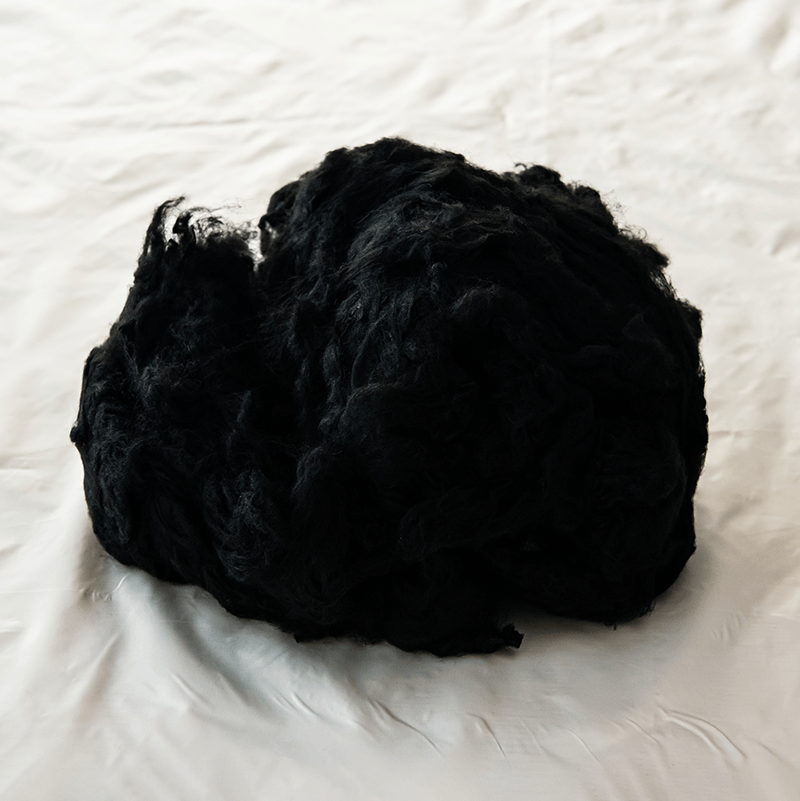
We also need to evaluate structural formats closely. Continuous filaments form long, unbroken strands. Manufacturers extrude them directly from the spinneret. In contrast, they process and cut Nylon Staple Fiber into short, standardized lengths. This physical format unlocks massive commercial value across industries. You can blend these short fibers seamlessly with natural materials. Mix them easily into cotton or wool. This blending enhances structural durability significantly. Crucially, it maintains a perfectly natural tactile feel for the end user.
Polyamide Variant Specifications
Material Variant | Melting Point (°C) | Primary Advantage | Common Application |
|---|---|---|---|
Nylon 6 | ~ 220 | High impact resistance, excellent dyeability | Carpets, apparel, ropes |
Nylon 66 | ~ 260 | High tensile strength, thermal stability | Automotive parts, industrial gears |
Engineers frequently compare these two popular synthetics. Both dominate the manufacturing world, but they serve different purposes. Let's compare their performance across key evaluation dimensions. The polyamide easily wins in raw elasticity. It stretches comfortably and recovers its original shape perfectly. It also dominates in absolute abrasion durability. However, polyester firmly wins in water resistance. It remains hydrophobic. It repels water and dries much faster.
Cost and return on investment dictate many engineering decisions. Synthesizing polyamides generally requires more expensive raw petrochemicals. You will undoubtedly pay a higher upfront material price. When is this premium actually justified? You must frame this around lifecycle longevity. Choose the premium option when component longevity is paramount. If a gear failure halts an entire production line, the premium is entirely justified. Reduced failure rates quickly offset initial raw material costs.
Here are specific scenarios justifying the higher upfront material premium:
Applications subjected to continuous, repetitive friction cycles over long periods.
Safety-critical components requiring guaranteed impact energy absorption.
Textile blends needing maximum tear resistance without adding heavy bulk.
Gears operating in environments lacking regular liquid lubrication.
We must strongly highlight environmental degradation risks. Prolonged ultraviolet exposure weakens polyamides significantly over time. The UV radiation breaks down the polymer chains directly. Polyester handles direct sunlight much better natively. If you specify these materials for outdoor applications, you must adapt. Require chemical UV stabilizers during the extrusion process. This additive prevents rapid brittleness. It also stops color fading under harsh direct sunlight.
Synthetic Performance Comparison Chart
Performance Metric | Polyamide (Nylon) | Polyester |
|---|---|---|
Elasticity & Recovery | Excellent | Moderate |
Abrasion Resistance | Superior | Good |
Moisture Absorption | High (Hygroscopic) | Low (Hydrophobic) |
UV Resistance (Untreated) | Poor | Excellent |
Countless industries rely daily on this versatile synthetic polymer. Industrial and advanced manufacturing sectors use it extensively. You will find it structurally supporting heavy-duty mooring ropes. It provides the crucial reinforcing layers inside tire cord fabrics. It forms the durable core of industrial conveyor belts. Modern 3D printing and CNC machining substrates also rely on it. In these harsh environments, high-impact tolerance is completely non-negotiable. Material failure leads to catastrophic operational downtime.
Commercial textiles and apparel also depend heavily on its properties. It dominates the global activewear and sportswear markets completely. Military-grade fabrics, like Cordura, utilize its extreme toughness to protect personnel. High-traffic commercial upholstery benefits immensely from strategic material mixing. Manufacturers leverage the blending capabilities of Nylon Staple Fiber here. This creates seating fabrics resisting tears while remaining comfortable for users.
The medical and dentistry sectors impose incredibly strict demands. They utilize highly niche, high-compliance applications daily. Surgical sutures depend entirely on reliable tensile strength during recovery. Dental floss uses its shred-resistant nature effectively. Diagnostic swabs utilize specialized micro-filaments for accurate sample collection. Procurement in this sector demands strict biocompatibility documentation. Sterilization standards remain absolute. You simply cannot compromise on these stringent medical guidelines during sourcing.
Navigating implementation requires strict oversight and proactive management. Supply chain volatility remains a constant risk factor globally. The global petrochemical market directly impacts raw polyamide pricing daily. Supply availability fluctuates heavily based on broader energy market shifts. Geopolitical events can disrupt monomer production unexpectedly. You must plan your procurement cycles carefully to avoid stockouts.
Quality assurance checkpoints are completely mandatory. Engineers and procurement managers must demand detailed material data sheets (MDS). Never accept undocumented batches. Insist on rigorous batch-to-batch tensile testing from the factory. Ensure strict compliance with recognized ISO and ASTM standards. Ask for third-party lab verification if you operate in critical sectors.
Machining and processing constraints will heavily challenge your production line. Injection molding processes must account for material shrinkage accurately. You also face severe moisture control challenges during manufacturing. You must thoroughly dry the material pellets prior to thermal processing. Use specialized desiccant dryers for this step. Steam generation inside the heating barrel ruins part integrity immediately. It causes visible splay marks and invisible internal voids.
Your next steps involve smart, logical shortlisting. Choose a manufacturing partner very carefully. Prioritize suppliers offering rapid prototyping capabilities and material testing. Verify their material traceability protocols strictly. A transparent supplier minimizes your hidden production risks significantly. Ask them about their specific drying and handling procedures during facility audits.
Specifying the correct variant demands careful technical alignment from your team. You must balance material limitations against actual operational realities. Accounting for moisture uptake is vital for structural success. Align your material choices directly with specific environmental conditions and load requirements. Doing so ensures optimal performance and maximum component lifespan.
Take action on your next production run proactively today. Consult a specialized material engineer immediately regarding your specific load requirements. Request highly specific material data sheets from your shortlisted suppliers to verify claims. Finally, submit a detailed RFQ outlining your required ISO standards to secure reliable material sourcing.
A: Continuous filaments form long, unbroken synthetic strands. Manufacturers extrude them directly from the spinneret. We use them for smooth, high-strength applications like parachute cords. Conversely, manufacturers cut these long strands into short, uniform lengths to create staple fibers. We use these short fibers primarily for blending seamlessly with natural materials like cotton or wool. This blending enhances fabric durability significantly while keeping a soft, natural texture.
A: Yes, it is highly vulnerable to prolonged ultraviolet exposure. UV radiation aggressively breaks down the molecular polymer chains over time. This chemical degradation causes the material to become brittle, lose tensile strength, and fade in color. If you are designing outdoor gear, you must specify UV-resistant coatings. Manufacturers add chemical stabilizers during production to protect the material from severe sun damage.
A: Yes, you can recycle it safely, though the process is chemically complex. Facilities melt down industrial waste or discarded fishing nets to create regenerated products like Econyl. This mechanical and chemical recycling process retains the original mechanical properties well. Specifying recycled variants supports broader sustainability goals effectively. However, you must verify supplier certifications closely to ensure environmental claims remain legitimate.
A: The material is naturally hygroscopic, meaning it absorbs moisture from the surrounding air. When it absorbs water, the polymer chains push slightly apart. This causes minor dimensional swelling across the component. It also results in a temporary loss of tensile stiffness and overall strength. However, this moisture absorption simultaneously increases the material's impact resistance and flexibility significantly.


