
English 
No. 21, Xingyuan Road, Jiefang Village, Gushan Town, Jiangyin City
Views: 0 Author: Site Editor Publish Time: 2026-08-11 Origin: Site


Spinnability defines how efficiently raw synthetic polymers convert into continuous spun yarn. Nylon Staple Fiber presents distinct mechanical and chemical challenges during this critical conversion process. Its unique synthetic structure demands precise processing parameters. Without proper management, extrusion and drafting phases often fail unexpectedly.
Poor spinnability directly drives severe operational losses on the factory floor. Production teams face excessive machine downtime. High end-breakage rates disrupt continuous manufacturing flows daily. These ongoing issues ultimately downgrade final yarn quality by increasing neps and causing structural unevenness throughout the textile.
This article provides an evidence-based framework for evaluating critical fiber specifications. Technical procurement teams and production engineers will learn how to assess specific material properties. You can use these practical insights to ensure optimal spinning performance. Understanding these distinct metrics guarantees a higher, more consistent manufacturing yield across your entire operation.
Dimensional consistency (denier and cut length) directly dictates drafting efficiency and yarn evenness.
Crimp structure and spin finish (OPU) are critical for managing fiber cohesion and mitigating nylon’s high static generation.
Tensile properties (tenacity and elongation) must align with both machine stress thresholds and the properties of any blended fibers.
Rigorous environmental control (moisture regain) during processing is non-negotiable for stable nylon fiber extrusion and spinning.
Subpar spinnability generates massive hidden costs for textile manufacturers. Process disruptions create high volumes of material waste. This physical waste typically manifests as excessive fly and usable noils accumulating around the machinery. Operators must frequently reduce spindle speeds to maintain operational continuity. Lower speeds directly reduce daily output quotas and shrink profit margins. Labor costs also surge during these unexpected disruptions. Floor workers spend countless hours piecing broken ends back together manually. Every minute spent fixing breakages destroys overall production efficiency.
Acceptable spinnability relies on strict, measurable performance metrics. Mills typically measure success by tracking ends-down per 1,000 spindle hours. A high ends-down rate indicates fundamental material incompatibility. Engineers also track yarn evenness using standard Uster CV% metrics. High CV percentages reveal alternating thick and thin places across the yarn structure. Minimizing nep formation remains another top priority for premium lines. Neps create highly visible dye-resist defects in final woven or knitted fabrics. These defects force quality control teams to downgrade the final product to B-grade status.
Procurement teams often face intense pressure to buy cheaper raw materials. However, slight premiums paid for highly consistent Nylon Fiber generate distinct operational advantages. Optimized materials prevent unpredictable machine stoppages. Uninterrupted throughput dramatically improves your overall operational yield. Consistent running conditions reduce the need for constant mechanical interventions and repairs. Maximizing machine uptime always outweighs minor cost savings on raw material purchases.
Proper denier and cut length strictly dictate your manufacturing success. A precise length-to-fineness ratio limit governs spinning physics. Overly fine fibers lack the necessary structural rigidity for aggressive processing. They easily bend out of alignment during high-speed operations. This misalignment causes severe drafting waves, which manifest as thick and thin spots. Conversely, improperly cut fibers trigger complete drafting failures. Short pieces slip uncontrollably between drafting rollers.
Standard lengths vary significantly based on your specific spinning system. You must strictly match the cut length to your chosen machinery.
Spinning System | Target Cut Length | Typical Application Focus |
|---|---|---|
Cotton System | 38mm - 51mm | Apparel and lightweight structural blends |
Worsted System | 80mm - 120mm | Heavy outerwear and industrial carpets |
Semi-Worsted | 60mm - 90mm | Upholstery and mid-weight technical textiles |
Crimp frequency provides necessary fiber-to-fiber cohesion. Manufacturers artificially induce this zigzag structure during initial production. You need this specific cohesion during the carding and drawing stages. Smooth strands would simply slide apart under standard tension. Crimp amplitude determines exactly how tightly these strands lock together during drafting.
We face a clear mechanical trade-off here. Insufficient crimp causes immediate sliver breakage on the line. The weak web simply cannot support its own weight between rollers. Conversely, excessive crimp traps short fibers aggressively. These trapped components quickly tangle into unbreakable knots. We call these tight knots neps. Neps completely ruin the visual appearance of finished garments. You must select a moderate crimp profile suited precisely for your specific processing machinery.
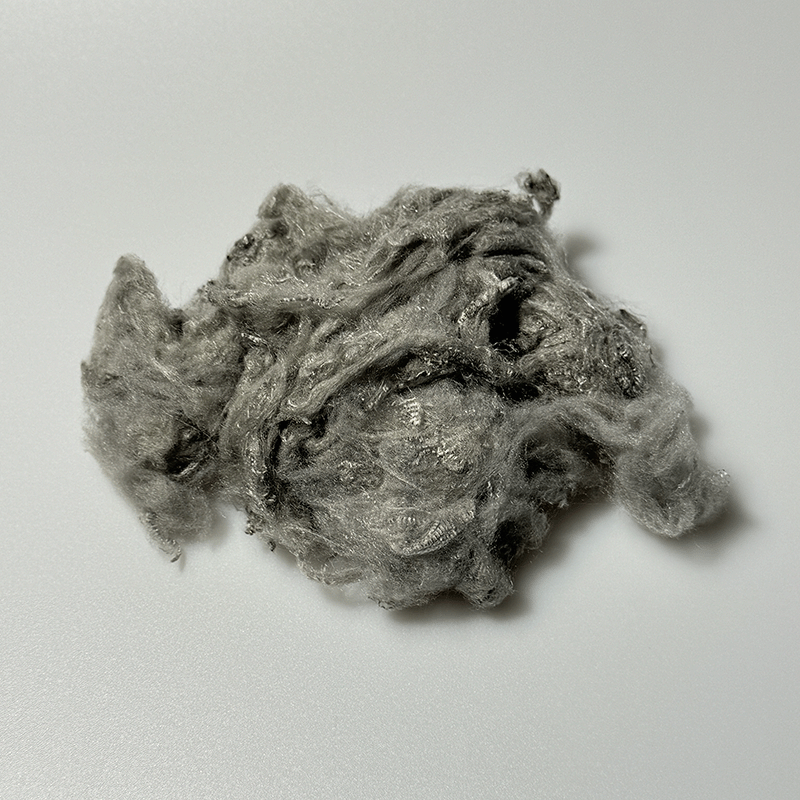
Static electricity poses a massive physical challenge for synthetic textiles. Nylon inherently possesses very low moisture conductivity. It cannot dissipate electrical charges naturally like cotton. The material accumulates static rapidly during high-speed metal contact. Fast-moving rollers generate immense friction constantly. This friction creates severe triboelectric charges across the fiber web. These charges cause individual strands to repel each other wildly.
Spin finish, also known as Oil Pick-Up (OPU), solves this processing dilemma. Manufacturers apply this chemical coating during the final extrusion phase. Chemical compositions blend powerful antistatic agents and specialized lubricants. The antistatic agents aggressively increase surface conductivity. This chemical intervention allows electrical charges to bleed off safely into the grounded machine frame.
You must perfectly balance two competing friction forces during spinning:
Fiber-to-fiber friction: You need moderate resistance here. It enables proper drafting without premature slippage between individual strands.
Fiber-to-metal friction: This value must remain exceptionally minimal. High metal friction causes disastrous roller lapping. Fibers wrap tightly around the drafting cots and halt production entirely.
Auditing supplier batch reports ensures vital chemical consistency. Uniform OPU distribution prevents localized processing failures. Dry patches in a bale will instantly cause a machine jam. Use this structured approach to audit your incoming lots safely:
Request the latest Certificate of Analysis for every distinct shipment.
Verify OPU variance percentages across multiple random bales.
Check the specific expiration date of the applied chemical finish.
Test a small laboratory sample for finish degradation before mass processing.
Carding cylinders apply incredibly aggressive mechanical action. Sharp wire teeth rip heavily through dense clumps of raw material. High initial modulus and strong tenacity allow the strands to survive this process. Weak materials break easily during this intense physical stress. Breakage artificially increases your short fiber content immediately. A sudden spike in short pieces ruins overall spinnability. It weakens the final spun yarn and causes highly uneven drafting.
Elongation profiles must precisely match any companion materials used. You rarely spin synthetic polymers entirely alone in modern mills. Facilities often blend them alongside cotton, wool, or modal. Each distinct material stretches differently under mechanical tension. Ring spinning and rotor spinning apply different stress loads, requiring careful evaluation.
Mismatched elongation causes disastrous differential load-bearing scenarios. Imagine blending a very rigid strand alongside a highly elastic one. The stiffer material bears the entire tensile load during high-speed processing. It will eventually snap long before the elastic counterpart reaches its physical limit. This internal structural imbalance leads to premature yarn failure. Matching these physical profiles guarantees much stronger blended yarns. You must review the stress-strain curves of all blended components before starting.
Nylon exhibits highly specific hygroscopic properties. It physically absorbs ambient moisture from the surrounding factory air. Its moisture regain typically hovers around 4 to 4.5 percent. This absorption rate significantly exceeds standard polyester metrics. However, it falls well below natural options like cotton or raw wool.
Your facility requires rigorous, continuous climate control to succeed. Ambient relative humidity (RH) and temperature directly impact spinnability. Fluctuating environments cause highly erratic running conditions. Dry air makes the material brittle, while overly humid air makes it sticky.
Processing Department | Ideal Temperature (°C) | Relative Humidity (RH %) |
|---|---|---|
Blow Room / Opening | 22 - 25 | 55 - 60 |
Carding Frame | 24 - 26 | 50 - 55 |
Ring Spinning Area | 26 - 28 | 50 - 55 |
Blow rooms and spinning frames need these exact parameters maintained continuously. Proper conditions maintain optimal structural pliability. Pliable strands bend easily around processing guides without fracturing or splitting. These carefully controlled environments also suppress dangerous static buildup naturally.
Pre-conditioning acts as a strict operational necessity. You must allow cold, compressed bales to acclimatize fully. Moving cold bales directly into a warm carding room causes surface condensation. Condensation immediately strips away the crucial spin finish. Storing bales in mill conditions for 24 to 48 hours stabilizes internal moisture levels. This simple step prevents massive headaches during the early opening stages.
Document verification establishes a necessary technical baseline for buyers. You must review Certificates of Analysis (CoA) rigorously. Never rely solely on generic marketing brochures. Look closely at denier variation and crimp retention statistics. Scrutinize the OPU consistency across multiple historical batches. High variance directly indicates poor manufacturing controls at the source factory.
Implement a structured pilot testing protocol always. Do not commit to bulk procurement immediately upon reviewing documents.
Process a 50kg to 100kg sample lot first to observe behavior.
Run the material fully from the blow room through ring spinning.
Measure fly generation carefully around the carding unit.
Evaluate sliver cohesion integrity during the drawing stages.
Record any instances of sudden roller lapping.
Assess external supplier compliance standards carefully. Look for recognized global certifications like OEKO-TEX. Ensure they use strict ISO testing methodologies for evaluating tensile properties. These international certifications indicate strong, mature process controls. A highly transparent supplier will eagerly share their specific testing methodologies with you.
Evaluating spinnability requires a highly comprehensive technical approach. Buyers must look far beyond basic price-per-kilo metrics. Assessing dimensional, chemical, and mechanical uniformity ensures long-term manufacturing profitability. Paying attention to these physical details prevents unexpected downstream failures.
Technical specifications must align perfectly with your specific spinning technology. Ring, rotor, and air-jet systems all demand slightly different material attributes to run smoothly. You should tailor your acceptable tolerances based on the aggressive nature of your chosen equipment.
You should immediately initiate structured pilot trials with shortlisted suppliers. Demand complete data transparency regarding OPU and crimp variance from them. Establishing these strict evaluation protocols guarantees smoother production runs and superior final yarn quality.
A: The ideal level typically ranges between 10 to 14 crimps per inch (CPI). This specific frequency provides optimal sliver cohesion. It allows smooth drafting without generating neps. You must adjust this baseline depending on the specific denier. Finer deniers often require slightly different crimp amplitudes to prevent aggressive fiber entanglement during carding.
A: Aged or improperly stored inventory loses its critical antistatic properties. The chemical lubricants evaporate or break down over time. This degradation leads to immediate roller lapping during processing. It also triggers massive fly generation as static electricity builds up uncontrollably. You should always rotate stock and verify finish expiration dates.
A: Mismatched elongation destroys yarn integrity. If one component stretches significantly less than the other, it bears the full tensile load. The stiffer material will fracture under pressure. This dynamic results in a significantly weaker blended yarn. You essentially negate the addition of a strong synthetic by ignoring elongation compatibility.
A: The standard moisture regain sits at approximately 4 to 4.5 percent. This property matters heavily for operational stability. Proper moisture levels directly correlate to natural static dissipation. It also dictates structural flexibility. Dry strands become brittle and snap easily during mechanical drafting. Maintaining proper ambient humidity prevents these physical failures.


