
English 
No. 21, Xingyuan Road, Jiefang Village, Gushan Town, Jiangyin City
Views: 0 Author: Site Editor Publish Time: 2026-10-22 Origin: Site


Consumer expectations in the global fashion industry are shifting rapidly. Modern buyers want more than just aesthetic appeal. They demand a precise balance of tactile comfort, structural durability, and verifiable sustainability. Meeting these strict demands requires textile manufacturers to look far beyond surface-level garment design. The true foundation of a high-quality piece of clothing is established long before the fabric enters the loom. It begins on the spinning mill floor with the meticulous selection of raw materials.
At the center of this material optimization strategy is a highly refined cellulosic intermediate. Known across the spinning industry as combed viscose, this material serves as the critical bridge separating raw cellulose from high-end, fine-count spun yarn. By ensuring individual fibers are perfectly aligned and completely free of short, irregular strands, this combed material allows mills to produce yarns that are exceptionally smooth. The resulting uniformity is exactly what luxury and performance apparel applications require.
This technical guide explores the specific apparel fabrics that benefit most from this combed cellulosic material. We will examine its performance metrics against other raw materials and analyze current shifts in textile engineering. Finally, we will detail how production managers and apparel brand owners can leverage these aligned fibers to streamline sourcing and elevate their clothing lines.
Combed cellulosic fiber is meticulously aligned and immediately ready for worsted spinning systems, offering unparalleled blending capabilities.
Wool and cotton blends gain measurable enhancements in drape, luster, and tactile softness when integrated with this intermediate material.
Compared to pure synthetic alternatives, fabrics utilizing premium combed cellulose deliver superior moisture regain and thermal regulation.
Incorporating highly aligned fibers significantly improves dye penetration and printability, ensuring flawless compatibility with Direct-to-Film printing technologies.
Sourcing high-purity raw materials from reliable suppliers directly impacts spinning efficiency, reducing end-breakage rates on the factory floor.
To make profitable sourcing decisions, procurement managers must understand the structural differences that set this refined material apart from standard loose fibers. The journey from raw wood pulp to a finished wardrobe staple is complex. The intermediate processing stages ultimately dictate the final yarn quality.
The manufacturing process blends chemical engineering with heavy mechanical refinement. It starts with extracting cellulose from renewable plant sources. Through a controlled closed-loop process, this cellulose is dissolved and extruded through spinnerets to create continuous filaments. These filaments are then cut into specific lengths to produce standard viscose staple fiber.
For premium applications, the process requires further mechanical intervention. These loose fibers are fed into carding machines where wire-covered cylinders disentangle the mass and remove impurities. Following carding, the material undergoes rigorous combing. This step extracts inferior short fibers, commonly known as noils, and aligns the remaining long fibers perfectly parallel to one another. The resulting product is a continuous, untwisted rope of fiber engineered for high-speed drafting.
Understanding the distinction between standard staple and combed top forms is vital for spinning efficiency. While both originate from the same cellulosic base, their physical presentation drastically alters operational workflow. Standard staple fibers are randomly oriented. They require the spinning mill to perform carding and combing in-house, which is acceptable for standard cotton-spinning but highly inefficient for luxury worsted systems.
In contrast, the pre-combed form arrives highly organized. Because the short fibers are already eliminated, the spun yarn exhibits vastly reduced hairiness. From an engineering perspective, this parallel alignment minimizes drafting waves in the spinning frame, resulting in a cleaner, stronger yarn with a lower coefficient of mass variation.
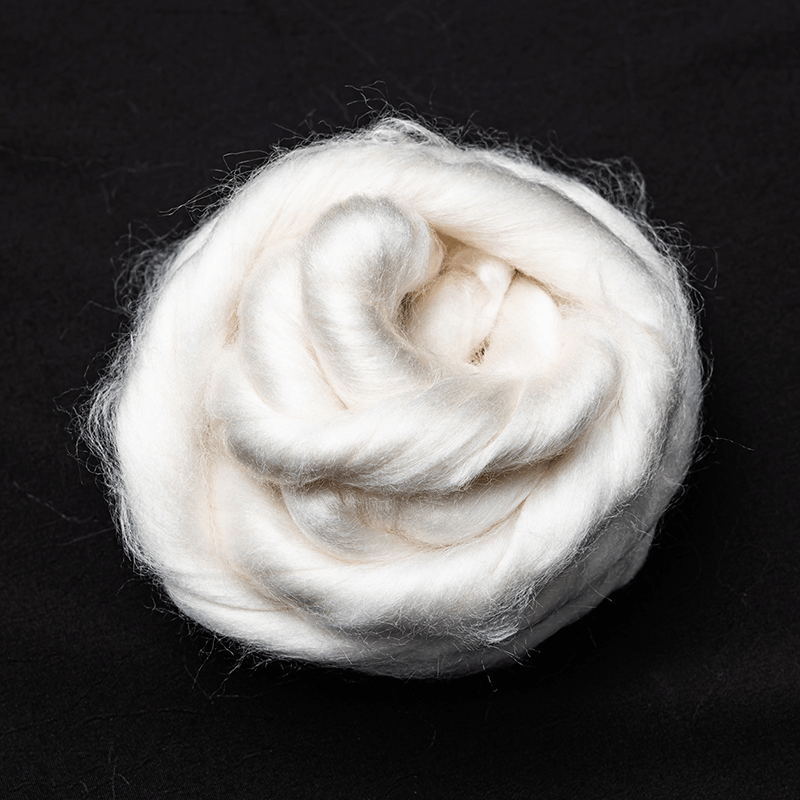
Integrating this material into production lines is driven by quantifiable physical properties. Textile engineers rely on these specific traits to solve common fabric performance issues.
A major concern in apparel development is thermal comfort. Because the fiber is derived from natural plant cellulose, it is inherently hydrophilic. Premium textile top fiber typically boasts a moisture regain of around 12% to 14%. Unlike petroleum-based synthetics that trap heat, this cellulosic structure actively absorbs moisture vapor from the skin. It then releases that moisture into the surrounding air, providing dynamic thermal regulation ideal for activewear and summer collections.
The mechanical combing process directly impacts the visual and tactile qualities of the fabric. Long, parallel strands with minimal crimp create a remarkably smooth yarn surface. This smoothness allows light to reflect evenly, generating a subtle luster without chemical finishes. Furthermore, the specific gravity and inherent flexibility of the cellulosic fibers translate into a fluid mechanical drape. Garments fall naturally against the body rather than holding a stiff silhouette.
Color yield is a critical quality metric in commercial production. The amorphous regions within the cellulosic polymer chains absorb liquid reactive dyes rapidly and deeply. This results in highly saturated colors with excellent wash fastness. Additionally, the lack of protruding surface hairs provides a pristine canvas for modern printing. Engineers consistently observe robust ink adhesion and crisp image transfer when utilizing Direct-to-Film and Direct-to-Garment technologies on these smooth fabrics.
Textile engineers strategically combine this material with other fibers to mitigate individual weaknesses and amplify overall fabric performance. The blending process is where the true commercial value is unlocked.
The worsted wool sector is a primary beneficiary of this technology. Pure wool provides excellent insulation and structure but often presents a coarse tactile feel against sensitive skin, especially when the fiber diameter exceeds 28 microns. It is also subject to extreme market price volatility.
By intimately blending wool with a high-quality viscose sliver at the draw frame, mills solve multiple problems simultaneously. The smooth cellulosic fibers soften the overall yarn, completely mitigating the prickle factor. The addition also introduces an elegant sheen that pure wool naturally lacks. Strategically replacing a percentage of expensive wool with cost-effective cellulose lowers raw material expenditures while maintaining a premium garment profile.
When engineering summer apparel, standard cotton is often compared against cellulosic blends. While 100% cotton is durable, adding combed cellulose to the spinning process creates a noticeably superior fabric profile. The hybrid yarn results in a fabric that is physically lighter and demonstrably softer. A pure cotton blouse may hold a rigid shape, but a cotton-viscose blend offers a relaxed, fluid fit that moves gracefully. This blend dominates the market for premium loungewear and breathable summer dresses.
In high-volume B2B manufacturing, the Terylene/Rayon blend is the undisputed industry standard for corporate and medical uniforms. Pure polyester provides extreme tensile strength and abrasion resistance but is notoriously non-breathable. Integrating combed cellulose into the blend injects essential moisture absorption and a soft hand-feel. The resulting fabric withstands rigorous industrial laundering while keeping workers comfortable and dry during demanding shifts.
Linen is prized for its earthy texture and breathability, but its tendency to crease severely is a major pain point for modern consumers. Blending linen with combed cellulose softens the rigid crystalline structure of the flax fibers. This engineering adjustment alters the fabric's mechanical memory, significantly minimizing deep wrinkling. The resulting fabric maintains its crisp, breathable identity but requires far less maintenance, making it perfect for premium resort wear.
To fully grasp the commercial value of this material, one must look at the broader shifts occurring across the global supply chain. The industry is currently under immense pressure to decarbonize and reduce reliance on virgin petroleum synthetics. Microplastic shedding from pure polyester garments has triggered strict regulatory scrutiny.
Consequently, there is a massive pivot toward semi-synthetic, plant-derived fibers. When processed through modern closed-loop systems that capture and reuse chemical solvents, cellulosic fibers emerge as a highly scalable solution. They bridge the gap between the high performance of synthetics and the biodegradability of natural materials. Furthermore, the push for circular fashion is driving demand for mono-material or easily separable blends. Garments engineered with high percentages of cellulosic tops are significantly easier to break down and recycle chemically, future-proofing production lines against upcoming environmental legislation.
Making informed sourcing decisions requires an objective assessment of material limitations and the engineering tactics used to overcome them.
The primary advantage of utilizing combed sliver is the measurable drop in yarn defect rates. Yarns spun from this material exhibit higher uniformity and fewer thick or thin places. From a design standpoint, the versatility is unmatched. By adjusting the twist multiplier during spinning, engineers can mimic the luxurious feel of silk or the heavy drape of worsted wool.
Despite its benefits, cellulose possesses a lower wet strength. Unlike cotton, which gains strength when saturated, these fibers lose a percentage of their tensile strength when wet, making pure garments susceptible to stretching during aggressive washing. To counter this, engineers rarely specify 100% compositions for high-durability garments. The standard mitigation strategy is blending with high-tenacity polyester or long-staple cotton. Modern textile finishing processes, such as mechanical pre-shrinking, are also routinely applied at the mill level to ensure the fabric meets strict commercial durability standards.
Selecting the correct intermediate fiber is a balancing act of cost, operational performance, and target demographics. The table below outlines how this material compares to standard alternatives on the factory floor.
Feature / Specification | Viscose Top Fiber | Combed Cotton Top | Synthetic Top (Polyester) |
|---|---|---|---|
Moisture Regain | 12% - 14% (Excellent) | 7% - 8.5% (Good) | 0.4% (Poor) |
Mechanical Drape | Fluid, silk-like | Structured, rigid | Stiff, holds creases well |
Wet Strength | Decreases when wet | Increases when wet | Unaffected |
Primary Application | Luxury suiting, resort wear | Denim, heavy workwear | Outerwear, cheap fast fashion |
While cotton tops are prized for rugged durability in denim, they lack fluid drape. Synthetic tops are cheap and durable but completely lack breathability. Choosing a plant-based rayon top provides a massive upgrade in wearer comfort and thermal regulation, making it the superior choice for premium apparel lines.
The quality of the final fabric is strictly dictated by the raw material entering the drafting zone. Selecting the right manufacturing partner is a critical engineering and business decision.
When evaluating a new supplier, procurement teams must request detailed technical data sheets. Look for a dry tenacity of ≥ 2.0 cN/dtex to ensure the fibers survive the tension of high-speed spinning. Fiber length uniformity should exceed 85% to prevent yarn breakage. Additionally, verify that the nep count is strictly controlled. A high-quality sliver will draft smoothly without creating tension spikes, ensuring a perfectly uniform yarn.
Beyond physical specifications, buyers must assess supply chain stability. A reliable manufacturer offers transparent traceability, consistent micronaire values across batches, and dependable lead times. This safeguards production schedules against unexpected delays. Exploring premium textile raw materials and sourcing a high-purity viscose fiber top is a highly profitable step toward producing luxury-grade fabrics.
Combed cellulosic fiber has fundamentally upgraded modern apparel manufacturing. By acting as a perfectly aligned bridge between raw cellulose and fine-count yarn, it provides spinning mills with superior operational smoothness and brilliant blending capabilities. Whether mitigating the itchiness of worsted wool, adding fluid drape to summer cottons, or injecting breathability into industrial uniforms, this versatile material elevates the performance of every fabric it touches.
The structural integrity and aesthetic appeal of a garment are established at the very beginning of the supply chain. Upgrading your intermediate materials ensures a superior end product that meets the exacting standards of today's market. Textile manufacturers and fashion designers should actively assess their current fabric blends. We encourage you to explore the high-grade technical specifications at Jy-Hongying and request samples to engineer your next innovative apparel line.
Staple fiber refers to the loose, randomly oriented raw material straight from the extrusion and cutting process. The combed top is that exact same material after it has been mechanically carded and heavily combed. This secondary processing removes short fibers and aligns the long fibers perfectly parallel, making it immediately ready for high-quality worsted spinning systems without further preparation.
Using a pre-combed sliver drastically improves spinning efficiency. Because the short fibers and neps have already been removed, the material drafts much more smoothly through the rollers. This significantly reduces end-breakage rates on the spinning frame, minimizes machine downtime, and results in a yarn with a much lower coefficient of mass variation.
Yes, it is highly effective for activewear when blended correctly. Its natural hydrophilic properties provide exceptional moisture regain, pulling sweat away from the body. When engineered in a blend with moisture-wicking synthetics like polyester, it creates a fabric that regulates temperature dynamically while maintaining the structural durability required for athletic movement.
Blending provides both structural and financial benefits. The smooth cellulosic fibers eliminate the coarse prickle factor associated with pure wool, drastically improving next-to-skin comfort. It also adds a subtle drape and sheen. Financially, it reduces the overall raw material cost and protects manufacturers from the extreme price volatility of the global wool market.
Absolutely. Yarns spun from combed tops have a highly uniform surface area with very few protruding hairs. When woven or knitted, this creates a pristine, flat fabric face. This smoothness is an ideal canvas for Direct-to-Film and Direct-to-Garment printing, ensuring that the print film adheres flawlessly and produces sharp, highly durable graphics.


