
English 
No. 21, Xingyuan Road, Jiefang Village, Gushan Town, Jiangyin City
Views: 0 Author: Site Editor Publish Time: 2026-10-30 Origin: Site


Industrial textile production operates in an unforgiving landscape. Materials are pushed to their absolute mechanical limits daily. Do they deploy in deep-sea mooring lines or automotive safety systems? Either way, fabrics must withstand extreme stress, harsh chemical environments, and relentless wear. Traditional piece-dyed materials frequently fall short in these arenas. They succumb to rapid color degradation and structural fatigue, ultimately compromising safety.
To solve these critical manufacturing bottlenecks, engineers are increasingly turning to a highly specialized polymer solution. In this comprehensive guide, we explore how integrating black nylon into your production lines addresses these exact challenges. It offers unparalleled mechanical strength while simultaneously reducing environmental processing costs.
Black Nylon Fiber delivers exceptional tensile strength and mechanical durability, functioning as a critical structural component in heavy-duty industrial applications.
Utilizing dope-dyed technology eliminates water-intensive piece-dyeing processes, significantly improving colorfastness and reducing environmental compliance costs.
Analyzing the technical specifications—such as tenacity and thermal stability—is essential for matching materials to precise manufacturing requirements.
The decision between staple fiber and continuous filament relies on specific end-use criteria, including yarn blending needs and required load-bearing capacities.
Integrating premium pre-colored synthetics into supply chains optimizes overall return on investment by minimizing production waste and extending the lifespan of the final product.
When procurement teams source materials for heavy-duty applications, aesthetic appeal takes a backseat to measurable performance. The baseline requirement for industrial textiles is the ability to operate reliably under continuous dynamic stress. Polyamide delivers a structural advantage that commodity polyester simply cannot match.
The formidable strength of nylon is rooted in its unique molecular architecture. Robust intermolecular hydrogen bonding forms a highly cohesive polymer matrix. This chemical composition translates directly into extraordinary load-bearing capabilities. Think about a crane hoisting a five-ton concrete slab using synthetic rigging. The fiber does not immediately rupture upon a sudden shock load. Instead, it effectively dissipates the applied kinetic energy across its internal structure. Consequently, fabrics engineered with this advanced polymer can endure extreme pulling forces. Structural integrity remains uncompromised over thousands of operational cycles.
Industrial environments are notoriously abrasive. Imagine a heavy-duty protective sleeve scraping relentlessly against a vibrating metal chassis. In such scenarios, nylon excels due to its remarkably low surface friction coefficient coupled with inherent elasticity. This dual-action property allows the material to absorb blunt impacts and return to its original dimensional state without permanent deformation. Compared to other synthetics, it consistently achieves superior ratings in Martindale abrasion tests. It actively resists the fraying, pilling, and micro-tearing that typically occur when textiles interface with rough concrete or abrasive soils.
Modern manufacturing demands a delicate balance between high-performance output and operational efficiency. The methodology utilized to color synthetic yarns fundamentally alters the physical resilience of the final product. Looking at the current industrial landscape, global environmental regulations are forcing a massive paradigm shift. Recent market data indicates a sharp decline in traditional piece-dyeing facilities. Driven by stringent wastewater discharge limits globally, top-tier manufacturers are rapidly pivoting toward solution-dyed synthetics. Industry forecasts project the pre-colored technical fiber market to grow exponentially over the next five years. This is not just an ecological compliance measure; it is a fundamental upgrade in material reliability.
Historically, piece-dyeing involved spinning a raw white yarn and submerging the finished fabric into boiling chemical vats. This surface-level application frequently yields uneven penetration and weakens the outer sheath of the yarn. Conversely, the creation of dope dyed black fiber shifts the coloration phase to the very beginning of the manufacturing cycle. Before the raw polyamide is extruded through the microscopic holes of a spinneret, a highly concentrated carbon black masterbatch is injected directly into the molten polymer melt. As the liquid cools and solidifies, the pigment becomes permanently fused into the core of the molecular structure.
This pre-colored extrusion technique yields profound operational advantages. From an ecological standpoint, the process requires absolutely zero water. This effectively eliminates the massive wastewater discharge and excessive thermal energy consumption that plague traditional dye houses. For facilities striving to meet stringent environmental standards, this represents a drastic reduction in their overall carbon footprint. Performance-wise, the core-integrated masterbatch guarantees absolute color uniformity across multi-ton production batches. Because the colorant is chemically locked within the matrix, the material exhibits zero color bleeding, even when subjected to industrial degreasers or prolonged submersion in saltwater.
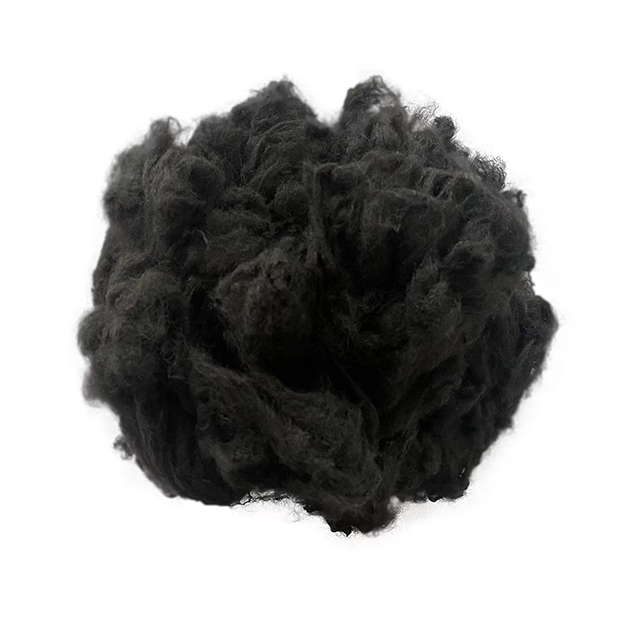
For textile engineers, material selection is a strictly data-driven process. Scrutinizing the precise technical parameters of industrial nylon fiber is the only way to guarantee that automated production lines operate without jamming. Furthermore, accurate specification ensures the final output complies with rigorous international safety certifications.
Heavy-duty applications dictate specific dimensional and strength metrics that far exceed standard apparel grades. To make selection straightforward, here is a practical engineering breakdown of critical parameters:
Parameter | Standard Apparel Grade | Heavy-Duty Industrial Grade | Engineering Impact |
|---|---|---|---|
Denier Range | 20D - 70D | 1.2D - 15D Staple / 210D - 1680D Filament | Determines overall fabric thickness, weight capacity, and tear resistance. |
Tenacity | 3.0 - 4.5 g/d | > 6.0 g/d | Provides the sheer mechanical muscle needed to secure heavy cargo safely. |
Elongation Rate | 30% - 40% | 15% - 30% | Grants the necessary flex to accommodate dynamic tension without snapping. |
Cut Length | N/A | 38mm - 120mm | Crucial for optimal blending with aramids or cotton on the spinning frame. |
Corrosive substances and extreme heat are daily realities on the factory floor. Standard industrial polyamide delivers exceptional thermal stability. Nylon 6 melts at approximately 220 degrees Celsius, while the 66 variant pushes that threshold to 260 degrees Celsius. This allows both to maintain structural cohesion near high-heat engine components. Beyond temperature resistance, the polymer acts as an inert barrier against common workplace hazards. It resists degradation from petroleum-based lubricants, machine oils, and alkaline solutions. This chemical inertness prevents premature fabric rot in processing facilities.
The predictable performance metrics and inherent versatility of black textile fiber allow engineers to deploy it across a vast spectrum of critical infrastructure. Its integration spans multiple high-stakes sectors.
The automotive sector operates under uncompromising safety regulations. Black nylon serves as the non-negotiable standard for seatbelt webbing. Its high tenacity and controlled elongation literally save lives during high-speed collisions. Beyond the cabin, it forms the structural backbone of airbag deployment systems and heavy-duty cargo nets. The deep black aesthetic is specifically chosen because it effectively conceals grease and industrial dirt, maintaining a clean appearance over years of use.
Civil engineering projects require materials that can survive decades buried in abrasive soils. Engineers weave these robust yarns into soil stabilization grids and subterranean filtration fabrics. The material's natural resistance to mildew, rot, and alkaline groundwater ensures that highways and retaining walls remain structurally sound long after the initial construction phase.
Occupational safety relies entirely on the fail-safe strength of synthetic rigging. Fall protection harnesses, tactical military gear, and heavy lifting slings utilize densely woven polyamide webbing. The high load-bearing capacity ensures that safety equipment does not sever when dragged across sharp concrete corners or rusted steel beams.
Procurement managers must select the precise physical format of the raw material to align with their specific spinning machinery. Both formats share the intrinsic chemical benefits of polyamide. Their physical geometries, however, dictate entirely different behaviors on the loom.
Produced by mechanically crimping continuous strands and precisely cutting them into short segments—typically ranging from 38mm to 120mm—black nylon staple fiber mimics the natural structure of cotton. Its primary advantage lies in its extraordinary blendability. Textile mills frequently spin these short fibers together with flame-retardant aramids or breathable cotton to engineer composite yarns. When woven into industrial workwear or protective gloves, the staple format drastically amplifies the garment's tear resistance. Simultaneously, it preserves a softer hand-feel that is essential for worker comfort during long shifts.
In contrast, continuous filament consists of endless polymer strands extruded directly onto large bobbins. This seamless format eliminates the microscopic weak points found in spun yarns, thereby maximizing absolute tensile strength. Manufacturers specify continuous filament for applications where uninterrupted structural integrity is paramount. Aircraft tire cords, high-pressure hydraulic hoses, and industrial lifting straps rely exclusively on unbroken filaments to prevent catastrophic unraveling under extreme tension.
For engineering decision-makers, upgrading raw materials must be financially justified by a clear return on investment. Transitioning to pre-colored, high-tenacity polymers fundamentally streamlines the economics of textile manufacturing.
A critical threat to outdoor industrial textiles is photo-oxidative degradation. When standard plastics endure prolonged exposure to sunlight, high-energy UV photons sever the covalent bonds within the polymer chains. This leads to severe brittleness and sudden snapping. However, the carbon black pigment utilized in colored nylon fiber acts as a formidable built-in UV absorber. Functioning as a radical scavenger, the integrated masterbatch safely dissipates solar radiation as low-level heat before it can attack the polyamide structure. This inherent UV shielding makes the material indispensable for marine rigging and outdoor cargo tie-downs.
In heavy manufacturing, facility downtime is incredibly expensive. By utilizing dope-dyed materials, textile mills entirely bypass the secondary dyeing stage. This eliminates the notorious bottlenecks associated with dye house scheduling and energy-intensive drying processes. Bypassing the boiling dye bath also prevents the thermal weakening of the yarn, resulting in significantly fewer breakages on high-speed weaving looms. The outcome is maximized machine uptime, minimized material scrap, and accelerated order fulfillment.
Identifying the optimal material on paper is only half the battle. Securing a resilient, high-quality supply chain is what ultimately guarantees manufacturing success. Variability in raw material shipments can lead to catastrophic inconsistencies in heavy-duty textiles.
Technical buyers must demand rigorous objective data from potential suppliers. Reliable vendors should provide comprehensive Technical Data Sheets and operate under strict quality management systems. Procurement teams should verify batch-to-batch consistency in denier variance, tenacity ratings, and colorfastness standards. Transparent documentation of breaking strength is non-negotiable for ensuring every spool performs exactly as engineered.
Industrial production cannot afford the friction of supply chain disruptions. It is imperative to partner with a manufacturer capable of executing stable volume deliveries. A dedicated production partner acts as an extension of your own engineering team. They provide precise control over masterbatch formulations and drawing ratios to perfectly match your proprietary machinery requirements.
Black nylon fiber has fundamentally transformed the landscape of industrial textile production. By offering an unmatched combination of mechanical strength, inherent UV resistance, and lasting color stability, it solves the most pressing challenges faced by heavy-duty manufacturers. Transitioning to this advanced material allows facilities to bypass expensive dyeing processes entirely, thereby drastically improving factory efficiency and overall yield.
Are you ready to eliminate production bottlenecks and upgrade your product's mechanical performance? Selecting the precise fiber format tailored to your specific application is the key to engineering superior, fail-safe products. Evaluate your line's exact parameters and source premium materials directly from industry experts. Visit JY Hongying today to explore high-quality black nylon solutions perfectly matched to your industrial needs.
Standard dyeing applies chemical colorants to the exterior of the yarn after it has been extruded, leaving it vulnerable to surface fading and abrasion loss. Dope dyeing takes a more advanced approach by mixing a concentrated black masterbatch directly into the liquid polymer melt prior to extrusion. This permanently locks the pigment inside the molecular structure, delivering absolute color uniformity and zero water pollution during coloration.
Because it is mechanically cut into short uniform lengths, staple fiber can be easily carded, spun, and blended with other materials like breathable cotton or flame-retardant aramids. This unique blending capability allows textile engineers to create composite fabrics that combine the extreme abrasion resistance of synthetics with the moisture-wicking comfort necessary for daily industrial uniforms.
Absolutely. The polymer naturally acts as an inert barrier against a wide array of alkalis, petroleum-based oils, and industrial solvents. Additionally, when engineered with a carbon black masterbatch, the dark pigment functions as a powerful UV absorber, shielding the internal polymer chains from solar degradation during prolonged outdoor exposure.
By integrating pre-colored yarns directly into the production line, textile mills eliminate the time-consuming post-production dyeing phase. Skipping the dye house streamlines the entire supply chain, slashes thermal energy consumption, and circumvents the exorbitant costs of wastewater treatment. It also reduces fabric defect rates caused by uneven dye penetration.
Yes, these advanced polymers are highly compatible with both mechanical and chemical recycling processes. Because the high-quality material retains significant structural integrity even after rigorous industrial use, it can be melted down, purified, and re-extruded to support the circular economy without sacrificing critical tensile strength.
While polyester is highly cost-effective and resistant to stretching, nylon offers significantly higher abrasion resistance, superior elasticity, and better shock absorption. In heavy-duty applications where sudden dynamic loads or continuous friction are present—such as lifting slings or protective sleeves—nylon's ability to dissipate kinetic energy without snapping makes it the safer, more durable choice.
The standard cut length for industrial applications typically ranges from 38mm to 120mm, depending entirely on the spinning system used and the fibers it will be blended with. Shorter lengths like 38mm are often optimized for cotton spinning systems, while longer cuts like 75mm or 120mm are preferred for worsted spinning and heavy-duty nonwoven fabric manufacturing.


